

GLF Schools

GLF Schools

GLF Schools was founded in 2012 in order to enable the federation of Glyn School (an academy in 2011) and Danetree Junior School. Together, we began our journey to become a MAT of more than 1000 talented staff working with over 10,000 children in 40 schools across 5 regions in southern England.

Our Schools

Banbury Region

Banstead Region

Berkshire & Hampshire Region

Caterham Region

Crawley Region

Didcot Region

Epsom Region

London Boroughs

Redhill Region

Sunbury & Camberley Region

Twitter Wall

Twitter Wall

27/11/25

Thank you to all our families that came along to enjoy our very first wreath making workshop. It was a fun night with friends and everyone created some beautiful designs. We hope these will hang on your door with pride! A big thank you to Mel and Kate for leading the workshop.

24/11/25

A huge thank you to our families! With your continued support during our recent book fayre, we earned over £170 to spend on these new additions. Your generosity allowed us the opportunity to extend our school library with all these fantastic new books pictured here.

19/11/25

Nursery have had a very exciting week, this week. They have been on a community walk around our estate, looking out for key features such as bus stops and sculptures.  They have also been practicing their fire safety skills, enjoying toasted marshmallows around the firepit.

11/11/25

Image

11/11/25

Cherry Fields have taken part in the 2 minute silence to honour those who lost their lives in the First and Second World War. Year 4 attended a local memorial event whilst our Early Years classes created wreaths to display at the front of the school. We Will Remember Them.

05/11/25

We are celebrating winning two awards,which go to the top-performing schools in the country based on national survey data. We are delighted to be recognised in this way. Our parents and carers are at the core of our success and to win two parent choice awards makes us very proud.

14/10/25

Please note the amended date for our next open event. If you are looking for a Reception 2026 place for your child please join us at 5pm on Tuesday 11th November.

08/10/25

Please join us on Monday 10th November for our open event. If you are looking for potential Reception 2026 places for your child, we would love you to come along and see what we do!

06/10/25

Year 2 pupils celebrating Jeans4Genes day recently. As a school we raised over £180 for this worthy cause.

16/09/25

Thank you to all of our school community for supporting PTA events over the past year. With the money raised we have been able to purchase some wonderful sensory chimes for our garden area. Without the hard work of members of the PTA this would not be possible-so thank you all!

07/07/25

Image

11/06/25

Image

09/06/25

Image

16/04/25

Good luck to all families awaiting news of your Reception place later today.

16/04/25

Good luck to all families awaiting news of your  Reception place later today.

05/02/25

Image

05/02/25

The Canal and River Trust paid us a visit, with a whole school assembly and a special early years themed event. They shared some fantastic ideas and guidance to keep our families safe.

05/02/25

The Canal and River Trust paid us a visit, with a whole school assembly and a special early years themed event. They shared some fantastic ideas and guidance to keep our families safe. 

27/01/25

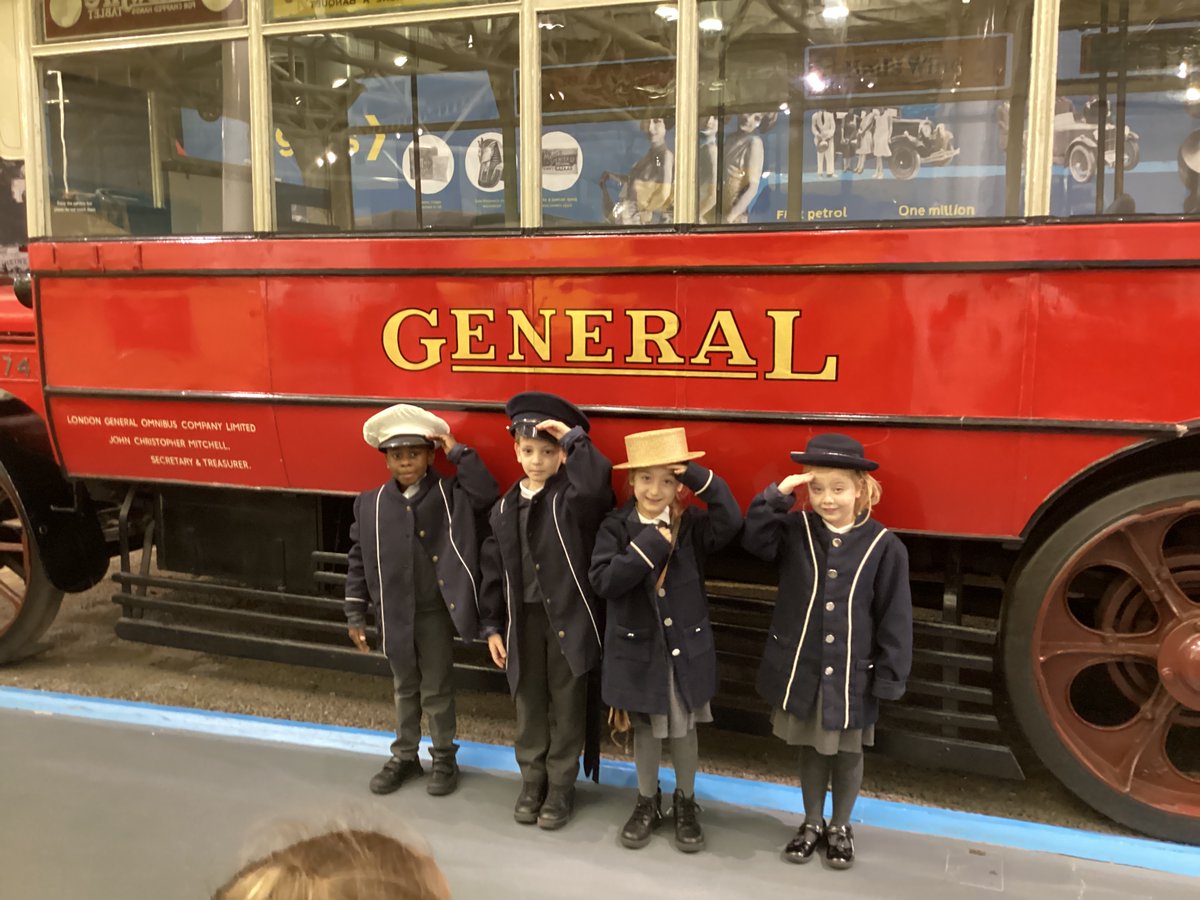
Year 1 went on a school trip to the British Motor Museum. Year 1 thoroughly enjoyed their time dressing up as bus drivers, riding on a 100-year-old bus and investigating the first ever car. Here are some pictures of the cars we observed and the costumes we dressed up in.

27/01/25

Year 1 went on a school trip to the British Motor Museum. Year 1 thoroughly enjoyed their time dressing up as bus drivers, riding on a 100-year-old bus and investigating the first ever car. Here are some pictures of the cars we observed and the costumes we dressed up in.

Computing

At Cherry Fields Primary we follow the Teach Computing curriculum which has been devised by experts from the National Centre for Computing Education in conjunction with the DfE. 

At the bottom of this page, you can find a copy of the Key Stage 1 and Key Stage 2 Teach Computing Curriculum map.

The National Centre for Computing Education | STEM


Intent

A high-quality computing education equips pupils to use computational thinking and creativity to understand and change the world. Computing has deep links with mathematics, science, and design and technology, and provides insights into both natural and artificial systems. The core of computing is computer science, in which pupils are taught the principles of information and computation; how digital systems work; and how to put this knowledge to use through programming. Building on this knowledge and understanding, pupils are equipped to use information technology to create programs, systems and a range of content. Computing also ensures that pupils become digitally literate – able to use, and express themselves and develop their ideas through, information and communication technology – at a level suitable for the future workplace and as active participants in a digital world.  

Through our computing education offer, we empower children to acquire and internalise disciplinary behaviours; there is a constant interplay between knowledge learnt, skills acquired and the ability to effectively express oneself grammatically in speech – Oracy. It is not enough for children to learn facts that they can recite or recall on demand to pass a test. Having a wealth of knowledge is irrelevant if they do not have the skill set needed to use that knowledge to better their position and therefore contribute positively to society. Furthermore, applying skills and using knowledge requires the most important element of all; the ability to communicate effectively. This will enable all children to think, behave, work and speak like a computer scientist. 

The intent of our computing education offer is to empower our children to dream, believe and achieve no matter their starting points. Our curriculum is therefore written to incorporate a balance between knowledge acquisition by reducing the cognitive load, the development of skills and the development of vocabulary; and deliberate experiences with the real world and local community. The school’s curriculum is posited on the notion that knowledge acquisition is fundamental to a human’s development. 

Implementation 

The units for key stages 1 and 2 are based on a spiral curriculum. This means that each of the themes is revisited regularly (at least once in each year group) and pupils revisit each theme through a new unit that consolidates and builds on prior learning within that theme. This style of curriculum design reduces the amount of knowledge lost through forgetting, as topics are revisited yearly. It also ensures that connections are made even if different teachers are teaching the units within a theme in consecutive years. 

The Teach Computing Curriculum is structured in units. For these units to be coherent, the lessons within a unit must be taught in order. However, across a year group, the units themselves do not need to be taught in order, with the exception of ‘Programming’ units, where concepts and skills rely on prior learning and experiences. 

National Curriculum Computing Programme of Study

KS1 Teach Computing Curriculum Map

KS2 Teach Computing Curriculum Map